
US College Costs Explained: 4 Proven Strategies for Paying for College Effectively
In this article
The cost of a U.S. college education is often the biggest concern for international families. While the published tuition fees may seem high, VNIS Education assures you that the Return on Investment (ROI) of a U.S. degree is substantial, and with smart planning, the expense is a worthwhile investment.
Drawing on reliable data on how American families fund higher education, we present 4 key strategies to help you effectively plan your budget and maximize your financial opportunities for studying abroad.
1. Deconstructing the Price Tag: Sticker Price vs. Net Price
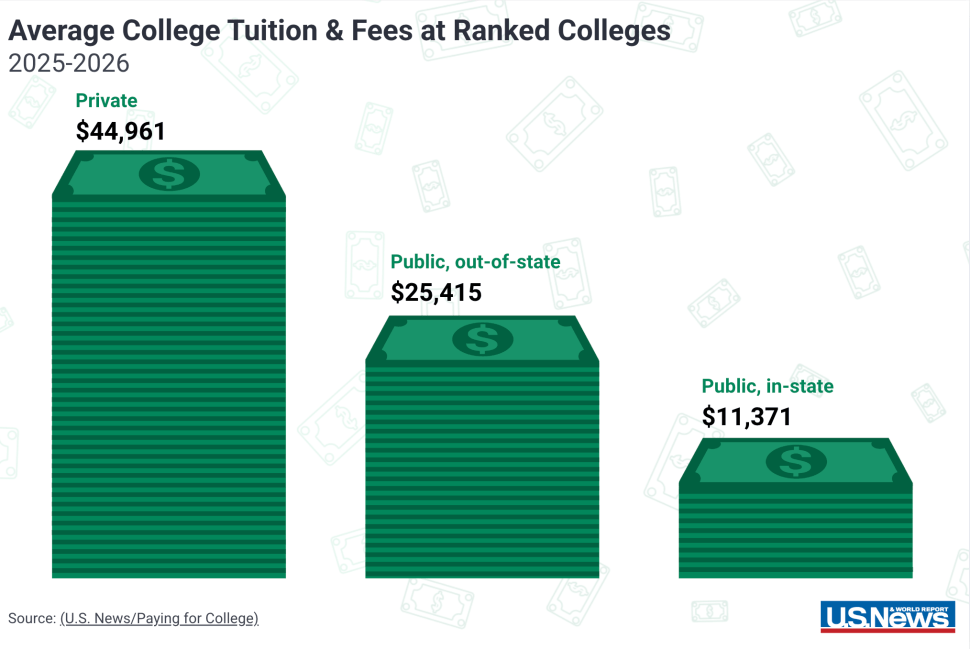
One of the most common misunderstandings about US college costs is focusing solely on the Sticker Price-the tuition and fees officially listed by the institution.
- Sticker Price: The maximum, published cost before any financial aid is applied.
- Net Price: The actual amount your family pays after subtracting grants and scholarships. Data consistently shows that the Net Price students pay is often significantly lower than the Sticker Price, especially for students qualifying for need-based aid.
For accurate planning, you must always focus on the Total Cost of Attendance (COA), which provides the full financial picture:
- Tuition and Fees
- Room and Board
- Books and Supplies
- Travel and Personal Expenses (the hidden costs)
Học phí trung bình tại các trường đại học hàng đầu (nguồn: U.S. News)
2. Understanding the 4 Core Funding Sources (The Funding Mix)
Surveys on how families pay for college reveal that costs are typically covered by a mix of sources, not just loans. The four main funding pillars are:
| Funding Source | Typical Contribution (Reference Data) |
| Family Income and Savings | Covers the highest percentage (Often over 50%) |
| Scholarships and Grants (Free Money) | Accounts for approximately 25% – 30% |
| Student and Parent Loans | Around 18% |
| Other Sources (Relatives, Friends) | Remaining percentage |
Strategy Insight: Your goal should be to maximize Scholarships and Grants (free money that doesn’t need to be repaid) and your family’s savings, thereby minimizing reliance on student loans.
3. 4 Key Strategies for Maximizing Your Financial Aid Strategy
To successfully navigate and reduce the burden of paying for college, VNIS Education recommends implementing these crucial steps:
🎯 Strategy 1: File FAFSA & CSS Profile Early
Many families skip the financial aid forms (FAFSA and CSS Profile) believing their income is too high to qualify. This is a critical mistake. Institutions use these forms to determine eligibility for valuable institutional grants and scholarships.
- Tip: Submit your FAFSA and CSS Profile as soon as they open (typically October 1st) to ensure you meet priority deadlines and access the maximum pool of available aid.
🎯 Strategy 2: Prioritize Scholarships and Grants
Scholarships and grants can average over $8,000 and cover a significant portion of the cost. Don’t limit your search to academic merit; explore opportunities based on hobbies, interests, community service, and background.
- Tip: Start your scholarship search early and apply for as many as you qualify for, understanding that every dollar of grant/scholarship money reduces your Net Price.
🎯 Strategy 3: Focus on Net Price and ROI
When comparing colleges, do not simply compare the Sticker Price. Instead, use a school’s Net Price Calculator to estimate your true cost. Evaluate the Return on Investment (ROI)-does the degree lead to strong career prospects and high starting salaries?
- Tip: A school with a higher Sticker Price but a generous financial aid package (resulting in a lower Net Price) may be a more economical choice in the long run.
🎯 Strategy 4: Budget for Hidden Costs
Your budget must account for all items in the Total Cost of Attendance (COA), not just tuition. These include textbooks, personal spending, international travel, and health insurance. Ignoring these hidden costs can strain your finances unexpectedly.
- Tip: Plan for 15-20% of your total budget to cover expenses outside of tuition and room/board.
VNIS Education understands that planning for U.S. college finances is complex. With our expert knowledge, we can help you analyze your costs, optimize your financial aid strategy, and secure the most suitable scholarships to make your investment in higher education worthwhile.
Related articles

Holy Trinity High School, Chicago: a four-year B-STEM Honors track, and two tuition figures worth understanding
Delphian School boarding costs for 2026-2027, and what to ask before you pay a deposit
Weber State University: tuition, scholarships and what is new this intake
Paying Tuition Fees via Flywire with Optimal Exchange Rates

Discover a World of Opportunities – Study at Gustavus Adolphus College
The Evolution of US Political Parties
Ready to start your journey?
Leave your details - our team will tailor a free plan for you.
Get free consultation