
Politics, monarchy and parliament in the United Kingdom
The United Kingdom operates as a constitutional monarchy and parliamentary democracy. The Monarch is the Head of State, while executive power is exercised by the Government, led by the Prime Minister and accountable to the House of Commons. This system combines centuries-old traditions, constitutional conventions and modern democratic institutions.
How is the United Kingdom governed?
The United Kingdom is a constitutional monarchy. The Monarch serves as Head of State, while the Government is responsible for running the country. The UK Parliament consists of the House of Commons and the House of Lords, with key roles in law-making, government scrutiny and national debate.
One distinctive feature of the UK political system is the balance between formal state authority, constitutional convention and parliamentary culture. Many powers of the Monarch exist formally but are exercised on the advice of the Government. Meanwhile, the House of Commons is the central elected political chamber, where the Government must maintain confidence to remain in office.
Diagram of the United Kingdom political system
The diagram below is built entirely with HTML and CSS for easy editing in WordPress, without relying on a static image. It shows the core structure: the Monarchy, Parliament, Government, Judiciary and devolved administrations.
The Monarch
King Charles III is the Head of State. Royal powers are exercised according to constitutional conventions and the advice of the Government.
UK Parliament
The sovereign legislature of the United Kingdom, consisting of the House of Commons, the House of Lords and the formal role of the Monarch in approving legislation.
His Majesty’s Government
The executive branch responsible for public policy, public services, taxation, foreign affairs, defence and state administration.
Courts & Supreme Court
An independent judiciary resolves disputes, interprets the law and ensures that public authorities act within their legal powers.
Devolved Governments & Legislatures
Some powers are transferred to institutions in Scotland, Wales and Northern Ireland. The level and scope of power differ between each nation.
Constitutional monarchy: the Monarch is Head of State, not the day-to-day head of government
In the British political system, the Monarch is the Head of State and a symbol of national continuity. However, everyday political authority does not sit with the Monarch. It is exercised by the Government, formed through the political majority and confidence of the House of Commons.
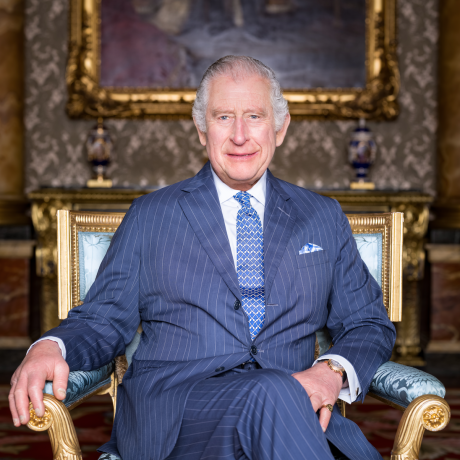
Symbolic and ceremonial role of the state
King Charles III is the Head of State of the United Kingdom. Official acts such as appointing a Prime Minister, opening Parliament or granting Royal Assent are normally carried out according to constitutional conventions and on the advice of the Government.
Therefore, when studying British politics, it is important to distinguish between formal legal authority and practical political power. This is one of the defining features of a constitutional monarchy.
UK Parliament: the House of Commons, the House of Lords and law-making
Parliament is at the centre of the UK political system. The House of Commons is the elected chamber, with Members of Parliament representing 650 constituencies across the United Kingdom. The House of Lords reviews, debates and suggests amendments to legislation, while also scrutinising government activity, although its political authority is more limited than that of the Commons.
His Majesty’s Government and the role of the Prime Minister
His Majesty’s Government is the executive branch of the United Kingdom. The Prime Minister leads the Government, appoints ministers, chairs the Cabinet and sets the overall direction of public policy. By convention, the Prime Minister is the person able to command the confidence of the House of Commons.
The judiciary: independent courts and multiple legal systems
The United Kingdom does not operate under one single legal system for all of its territory. In practice, it contains separate legal systems: England and Wales, Scotland and Northern Ireland. This reflects the historical formation of the United Kingdom as a political union.
Devolution: powers for Scotland, Wales and Northern Ireland
Devolution is the process through which some powers previously held at the central level are transferred to legislatures and governments in Scotland, Wales and Northern Ireland. This model is not uniform: each nation has its own institutions, powers and political context.
Why should international students understand UK politics?
International students do not need to become political experts, but a basic understanding of the UK political system can help them follow the news, understand their rights and responsibilities, and adapt more confidently to academic and social life in the United Kingdom.
- Understanding education policy: tuition fees, visas, work rights and international student rules are often linked to Government and Parliament decisions.
- Understanding regional differences: Scotland, Wales, Northern Ireland and England may have different public policies and student support arrangements.
- Reading news with context: students can better understand elections, parliamentary debates, immigration changes and education budget decisions.
- Joining student life: many universities have student unions, debating societies and clubs focused on politics, law or international relations.
- Academic preparation: for students studying law, politics, international relations, public policy or public economics, this knowledge is especially useful.
Want to learn more about studying in the United Kingdom?
The United Kingdom is one of the world’s leading education destinations, known for its long-established universities, practical programmes, internationally recognised qualifications and multicultural academic environment. VNIS Education supports Vietnamese students and families with university selection, programme planning, applications, visa preparation and pre-departure guidance.
Frequently asked questions about the UK political system
Is the United Kingdom a constitutional monarchy?
Yes. The United Kingdom is a constitutional monarchy. The Monarch is the Head of State, while practical executive power is exercised by the Government led by the Prime Minister.
What institutions make up the UK Parliament?
The UK Parliament consists of the House of Commons, the House of Lords and the constitutional role of the Monarch in the legislative process, especially Royal Assent, which allows a bill to become an Act of Parliament.
How many Members of Parliament are in the House of Commons?
The House of Commons has 650 Members of Parliament elected to represent constituencies across the United Kingdom.
How is the UK Prime Minister chosen?
By convention, the Monarch appoints the person most likely to command the confidence of the House of Commons as Prime Minister. In practice, this is usually the leader of the party with a majority of seats in the Commons.
What is devolution in the United Kingdom?
Devolution is the transfer of some powers from Westminster to institutions in Scotland, Wales and Northern Ireland. The level of power is not identical across the three nations.
Should international students understand UK politics?
Yes, at a basic level. Understanding UK politics helps international students follow education policy, immigration rules, public services and wider issues that may affect student life.
Related articles
University of Roehampton, January 2027 intake: scholarships up to £5,000 a year, no interview
£4,000 scholarship at the University of Roehampton - September 2026 intake

How Visa Trends Are Reshaping International Students’ Study Abroad Choices

Raffles Medical Clinic’s Appointment as Health Screening Service Provider for Visa Applicants
WorldTrips Atlas Travel Insurance for the USA