
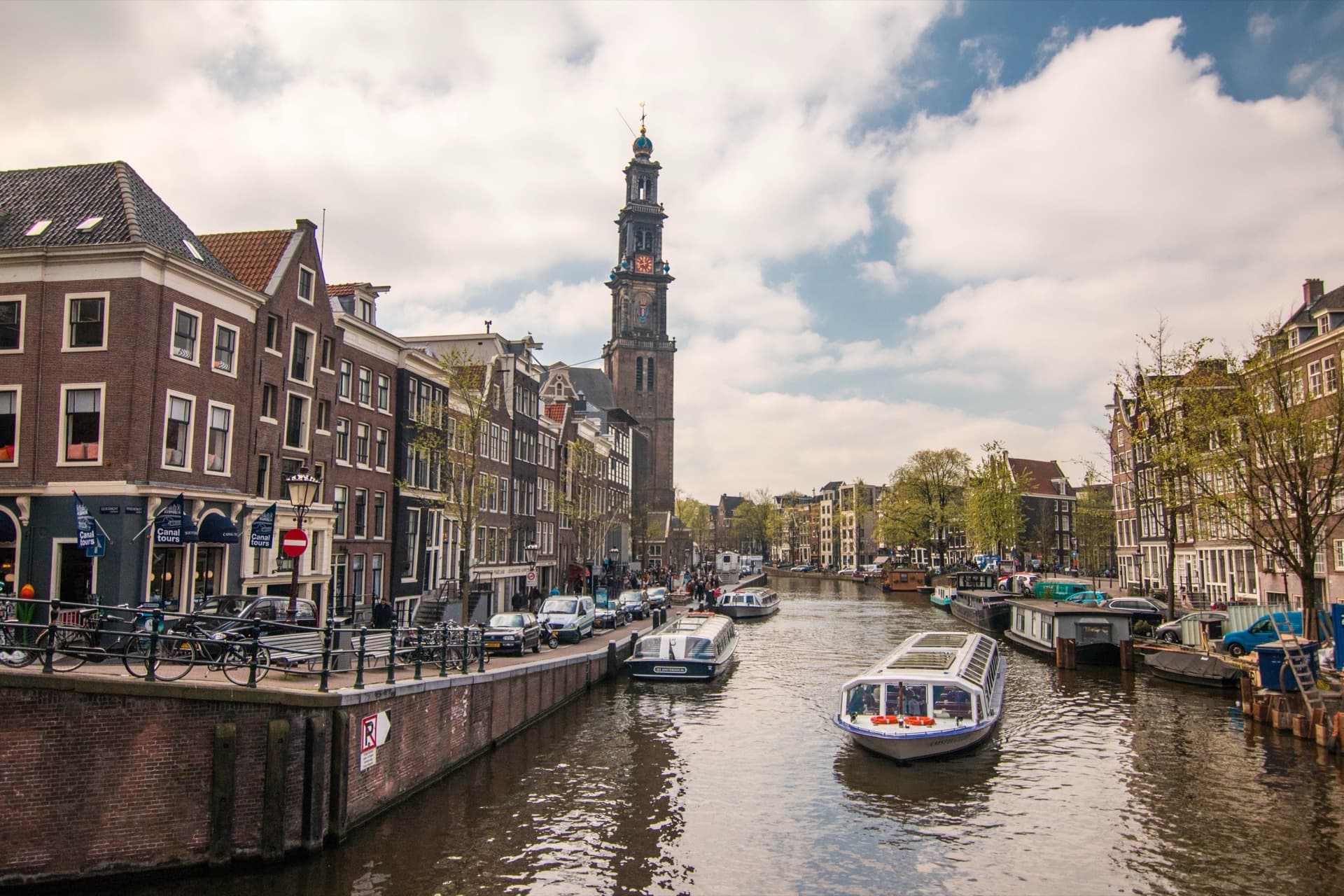
Study in the Netherlands
The widest choice of English-taught degrees in continental Europe - plus a year to find work
The Netherlands splits higher education into two branches: research universities (WO) and universities of applied sciences (HBO), the latter building a work placement into the degree. It offers more English-taught programmes than any other country in continental Europe, so you do not need Dutch to study. After graduation, the orientation year (zoekjaar) grants a one-year residence permit to look for work, and you may apply within three years of graduating. VNIS guides you from choosing a programme through to the residence permit.
Advantages of studying in the Netherlands
Taught in English
The Netherlands offers the largest number of fully English-taught degrees in continental Europe, from bachelor's to master's.
WO and HBO are different paths
WO is research-oriented and academic; HBO is career-oriented with a placement built into the programme. Choosing the branch matters more than choosing the university.
Orientation year (zoekjaar)
A one-year residence permit to look for work, which you may apply for within three years of graduating; during it you may work without a separate work permit.
Your university sponsors you
Only institutions recognised as sponsors (erkend referent) may enrol non-EU/EEA students, and they file the MVV and residence permit with the IND on your behalf.
System, applications & residence permits
Two branches
Research universities (WO): academic and research-oriented; bachelor's usually three years, master's one to two.
Universities of applied sciences (HBO): career-oriented; bachelor's usually four years with a placement (stage) inside the programme.
The two lead to different orientations, not different levels of value. Choosing the wrong branch means four years studying in a way that does not suit you - decide this before you shortlist universities.
Quality assurance for both branches is carried out by NVAO.
Questions worth asking early
Is the programme numerus fixus (capped intake)? If so the deadline is 15 January with its own selection round - a day late costs a year.
Is the programme taught entirely in English, or are some components in Dutch?
Does the university guarantee housing for first-year international students? This is the most important question and the one most often skipped.
Is there a compulsory placement, and how much help does the university give in finding one?
Residence permit & after graduation
Long-stay study requires an entry visa (MVV) and a residence permit, issued by the IND (Dutch Immigration and Naturalisation Service).
YOUR UNIVERSITY files for you: only institutions recognised as sponsors (erkend referent) may enrol non-EU/EEA students, and they deal with the IND directly.
You must show sufficient funds for one academic year at the amount published by the IND; that amount is revised periodically, so use the figure for your actual intake.
Non-EU/EEA students may work only within limits, and the employer must hold a work permit for you - unlike many other countries. Do not budget on part-time earnings.
After graduation: the orientation year (zoekjaar), a one-year residence permit to look for work or start a business, which you may apply for within three years of graduating. During that year you may work freely and your employer needs no work permit for you.
Costs & scholarships
Non-EU/EEA students pay the institutional fee, higher than the statutory fee for EU students; it varies widely by field, with medicine, dentistry and some engineering programmes at the top.
Living costs in Amsterdam and Utrecht are markedly higher than in Groningen, Enschede or Maastricht - the city you choose affects your budget as much as the university does.
Holland Scholarship: for non-EU/EEA students in their first year, funded by the Dutch Ministry of Education together with participating institutions.
Orange Tulip Scholarship: a country-specific scholarship programme coordinated by Nuffic Neso, and Vietnam is among the participating countries.
VNIS checks current tuition, scholarships and financial requirements against the exact university and intake you choose.
Housing - said plainly
The shortage of student housing in the Netherlands is real and long-running, and it is worst in Amsterdam, Utrecht and Groningen.
Some universities reserve rooms for first-year international students and some do not; where there is no guarantee you compete on the open market.
Ask this question BEFORE you accept an offer, not after. Some universities open housing applications only for a short window once you confirm your place.
Be wary of any listing that asks for a deposit before a viewing - it is a common scam aimed at newly arrived international students.
Where to study in the Netherlands
The list covers both research universities (WO) and universities of applied sciences (HBO), which have different orientations. VNIS advises on the branch before the university.
Why study in the Netherlands?
The clearest strength of the Netherlands is not a single university but breadth: it offers more fully English-taught degrees than anywhere else in continental Europe. That means you can pick a narrow, specific field - the one you actually want - without first learning another language, which is not easily true of Germany, France or the Nordics.
The HBO branch is worth attention if you want to start working early: the placement is part of the degree, so graduates leave with real experience rather than a transcript alone. The orientation year then gives a year to find work - and, more usefully, you may apply for it within three years of graduating, so going home to work for a while and returning later remains possible.
Two things VNIS says up front rather than letting you discover them after arrival. First, student housing really is short, especially in Amsterdam and Utrecht - ask the university about housing before accepting an offer. Second, part-time work rights for non-EU/EEA students are limited and require a work permit held by the employer, so do not count part-time earnings in your budget.
Articles about studying in the Netherlands
Student life in the Netherlands: the BSN, the bicycle, and what nobody tells you
The zoekjaar: a year to find work, and why it is worth more than it looks
Working while studying in the Netherlands: the permission is not yours to give
Finding housing in the Netherlands: start before you have an offer
Scholarships for the Netherlands: where to look and why timing decides
The cost of studying in the Netherlands: two tuition tracks and the hidden items
Ready to study in the Netherlands?
Leave your details and our team will tailor a plan - completely free.
Request consultation